
GTP Roundtable: Nigeria’s quest of leading AfCFTA rests squarely on quality of our transport infrastructure – Gov Sanwo-Olu
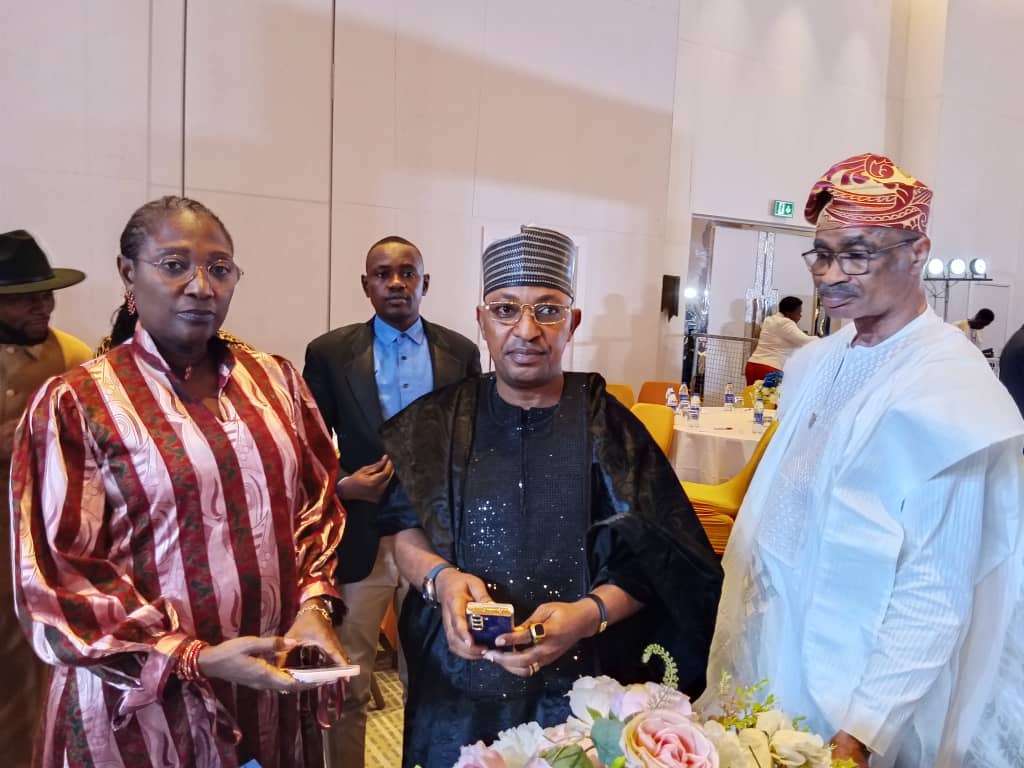

By Gboyega Oni
Governor Babajide Olusola Sanwo-Olu of Lagos State has stated that Nigeria’s economic ambition of becoming a leading and major player in the Africa Continental Free Trade Zone Agreement (AfCFTA) towards achieving full security, industrialization, and competitive manufacturing will rest squarely on the quality of our transport infrastructure and systems.
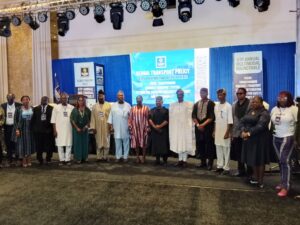
Governor Sanwo-Olu, who was a special guest at the Global Transport Policy (GTP) Annual Multimodal Roundtable at Ikeja on Wednesday, June 17, 2026, stated this, while explaining various investment drives which his administration has committed into road, rail, and water transport infrastructure in the state.
The theme of the roundtable was Transforming Nigeria’s Transport System: Integrating Solutions for Safety, Efficiency, and Sustainability.
Represented by the Managing Director of the Lagos Metropolitan Area Transport Authority (LAMATA), Engr. Abimbola Akinajo, Sanwo-Olu reaffirmed the government’s commitment to sustainable, integrated policies designed to meet the growing demands of residents and businesses in the state.
He pointed out that the policy alignment, the resource mobilisation, and the regulatory framework that will truly transform Nigeria’s transport ecosystem must flow from the federal government in partnership with the states and the private sector.
In his remarks, the Chairman of the event, Air Commodore Ademola Onitiju (rtd) said some 16 years ago, the Nigerian Transport policy was initiated and its fundamental objective was to develop an adequate, safe, environmentally sound and efficient transport system, in the context of a progressive and competitive economy.
Onitiju expressed disappointment that our transport policy failed to unify all the modes, saying “The Nigerian environment is eminently positioned to utilise maximally, the 4 most important means of transportation-road, rail, water and air transport. Our transport systems are the lifeblood of our economy and the arteries of our communities. Yet, too often, they operate in silos-road, rail, air, and waterways functioning independently, rather than as parts of a unified whole.

“Oftentimes, road networks are planned without rail integration, urban transit disconnected from rural needs, freight corridors competing rather than complementing.”
“Transportation is more than just movement from point A to point B. It is the lifeblood of economic growth, the bridge to social inclusion, and a critical lever in our fight against climate change. Poor multi modal transport management could result in congestion which costs billions in lost productivity.”
Related Posts

Onitiju was of the opinion that the roundtable would be able to break down these silos and design a truly integrated transportation framework one that aligns infrastructure, technology, policy, and human needs into a single, coherent system.
The lead paper titled “Strengthening Institutions And Investments: Driving A Resilient Workforce was delivered by Dr. Dr. Boboye Oyeyemi, former Corp Marshall, Federal Road Safety Commission (FRSC).
Oyeyemi, who is now the President of the Chartered Institute of Logistics and Transport (CILT), emphasized innovation, effective policy implementation, and sustainable practices as drivers of economic growth and national development.
Earlier in his address, the Chairman/Chief Consultant, Global Transport Policy, Dr. Oluwasegun Musa, said Nigeria currently loses an estimated ₦3.2 trillion annually ($4 billion) to transport inefficiencies – gridlock, poor modal integration, and logistics fragmentation.
According to him, “Our logistics cost as a percentage of GDP stands at over 42%, compared to a global best practice of under 15%. Road transport carries over 90% of freight and passengers, while rail moves less than 1% – a dangerous imbalance that inflates costs and emissions. Road traffic fatalities exceed 12,000 deaths per year according to recent FRSC data, with another 70,000 serious injuries. These are not mere numbers; they are economic drains and human tragedies.
“Only 18% of transport agencies have fully digitised workforce planning. We face a skills gap of over 200,000 trained logistics and multimodal professionals. Without deliberate investment in institutional capacity and human capital, no technology or infrastructure will deliver results. We must move from ad-hoc training to certified, continuous workforce resilience.
“I have consistently said that, Cargo can move by rail to terminals, then be distributed by trucks or connected to airports and seaports. That is how an effective multimodal system works. Yet today, a container from Lagos to Kano can change hands five times and take two weeks. Integrated corridors can cut travel time by 40% and reduce logistics costs by 25–30%, directly lowering commodity prices and boosting GDP by an estimated 1.5%. The rail sector – cheaper, faster, and higher volume – must receive the strategic attention it deserves.
“Transport accounts for 28% of Nigeria’s carbon emissions from fossil fuel combustion – a figure rising at 6% annually. Smart mobility (ITS, e-mobility, non-motorised transport) can slash emissions by 20% by 2030 while halving road crashes. We have the tools; we need the political will and cross-sector collaboration.
“I have always maintained that government cannot do it alone. Public-Private Partnerships, Build-Operate-Transfer models, and foreign direct investment are not optional – they are the engine of infrastructure delivery. We commend the federal government’s renewed focus on rail and inland waterways, but we must accelerate. Every year of delay adds ₦800 billion in avoidable logistics waste.”
Musa pointed out that the roundtable was a call to action. “Over the next few hours, we will interrogate policies, showcase relevant insights, and design a practical roadmap for a safer, smarter, greener Nigeria,” he submitted.
The roundtable, attended by policymakers, industry leaders, academia, and transport experts, was concluded with awards presentation to some distinguished individuals and organizations for their contributions to transport development, safety, and sustainability.