


Nigeria-China Currency Swap will lead to faster direct shipping links – CBN
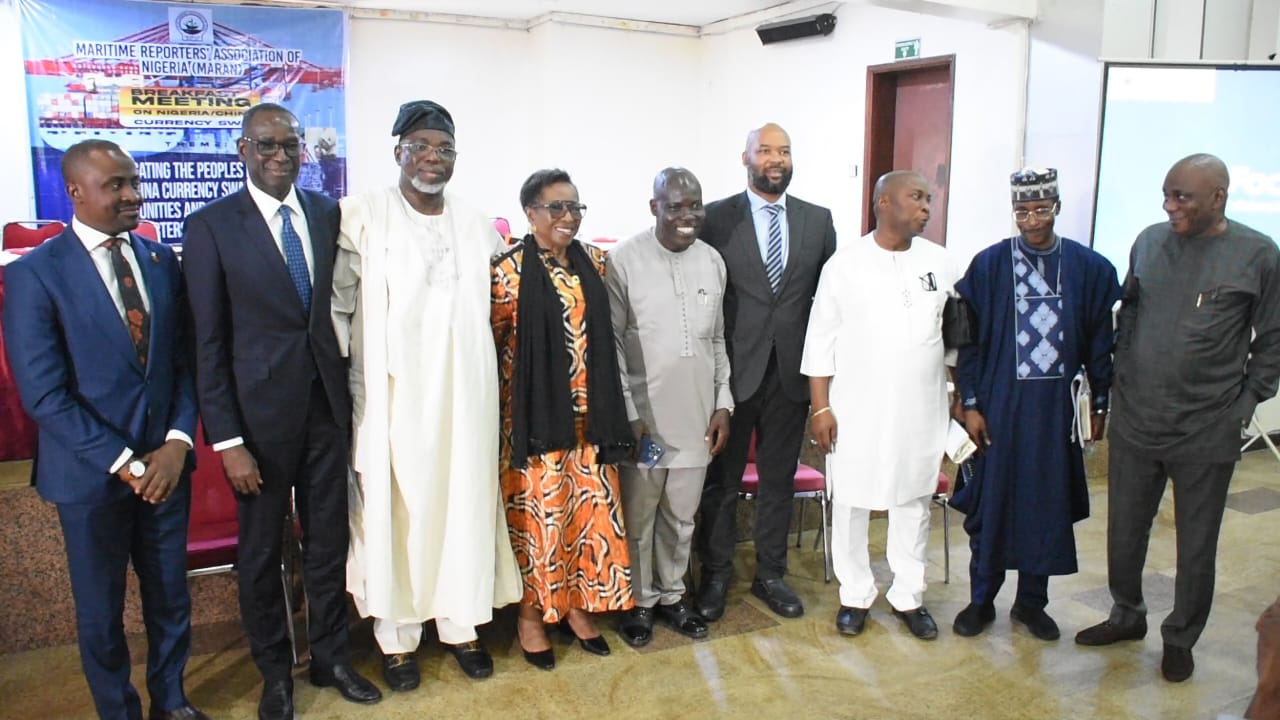

The Governor, Central Bank of Nigeria (CBN), Mr. Olayemi Cardoso, says Nigerian seaport operators will benefit bountifully from the currency swap deal between Nigeria and China as the deal will lead to faster port clearance, improved trade finance instruments, and direct shipping links such as the Lekki Deep Sea Port, a Chinese-backed infrastructure project under the Belt and Road Initiative.
Mr. Olayemi Cardoso described the currency swap deal as a transformative policy instrument that could significantly reduce shipping costs, enhance trade efficiency, and ease foreign exchange pressure in Nigeria’s maritime industry.
The CBN Governor stated that the agreement, originally signed in 2018 and recently renewed in December 2024, enables Nigerian and Chinese businesses to conduct trade directly in naira and renminbi, bypassing the U.S. dollar.
Cardoso stated this while speaking at a stakeholders’ breakfast meeting organized by the Maritime Reporters’ Association of Nigeria (MARAN) in Lagos on Tuesday.
“The swap agreement simplifies the settlement of trade transactions in local currencies and reduces the pressure on Nigeria’s dollar reserves. This, in turn, lowers the cost of doing business and enhances the competitiveness of Nigerian trade,” Cardoso said.
Represented by Mr Anthony Ogufere, Special Adviser to CBN Governor on Finance and Strategy noted that China had become Nigeria’s largest trading partner by the end of 2024, accounting for about 35% of total imports and reaching a trade volume of $11.58 billion.
However, the CBN Governor acknowledged that several challenges still hinder the full potential of the currency swap framework. Chief among them is Nigeria’s significant trade imbalance with China and the limited adoption of yuan-denominated transactions by Nigerian businesses.
He however called for greater sensitization, policy coordination, and efforts to expand non-oil exports to China.
Related Posts


Also speaking at the event, Mr. Martins Olajide, a representative of the Nigeria-China Strategic Partnership, presented a paper that offered a more cautious outlook. He noted that while the swap deal provides short-term relief and smoother trade operations, it is not a sustainable solution to the naira’s persistent depreciation.
Describing the swap arrangement as “swapization,” Olajide warned that Nigeria’s economic vulnerability and dependence on imports, especially from China, undermines the true impact of the agreement. He emphasized the need for structural reforms, particularly in industrialization, value addition, and local production.
“Without these changes, the swap deal may only reinforce economic dependence on China without solving the underlying issues,” he said.
In his opening remarks, the Chairman of the event and Chairman of the Customs Consultative Council (CCC), Aare Akeem Olarenwaju, decried the volatility of the naira-dollar exchange rate as a major cause of the skyrocketing cost of goods in Nigeria. He called for greater public awareness of alternative currency options like the Chinese yuan.
“You can’t determine the price of goods within a few hours due to constant exchange rate changes. Today it’s ₦1,600 to a dollar, and in the next few hours, it could be ₦1,700 or ₦1,500. It’s the common people who suffer the most,” Olarenwaju lamented.
He commended the organizers for opening up conversations around trade, currency, and maritime development, urging media professionals to help educate the public on alternatives that could reduce the nation’s dependence on the U.S. dollar.
Earlier in his welcome address, MARAN President, Mr. Godfrey Bivbere, reaffirmed the association’s commitment to promoting dialogue on key economic issues. While acknowledging the swap deal’s promise in reducing transaction costs and enhancing trade efficiency, Bivbere stressed the need for a balanced discourse.
“We are not only here to applaud progress but also to interrogate policy. We must understand both the positive impact and the underlying risks associated with China’s expanding economic footprint in Nigeria,” he said.
Bivbere urged stakeholders across the maritime, trade, and financial sectors to approach the Nigeria-China currency swap with critical insight, noting that sustainable benefits would only come through policies that protect national economic interests while encouraging growth and competitiveness.