
CVFF: Nigeria may face 96,000 shortfall of maritime professionals in 2026 – Captain Olubowale
As Nweke urges NIMASA to disburse CVFF quickly

By Gboyega Oni
Nigeria’s core maritime manpower is dwindling and fast fading out. Between 2015 and 2023, the number of active Nigerian seafarers dropped by nearly 40%. Our training institutions are underfunded, our cadets struggle to gain sea-time, and our officers are ageing out of service.
By 2026, Nigeria may face a shortfall of 96,000 trained maritime professionals across seafaring, engineering, and logistics if we don’t act now.
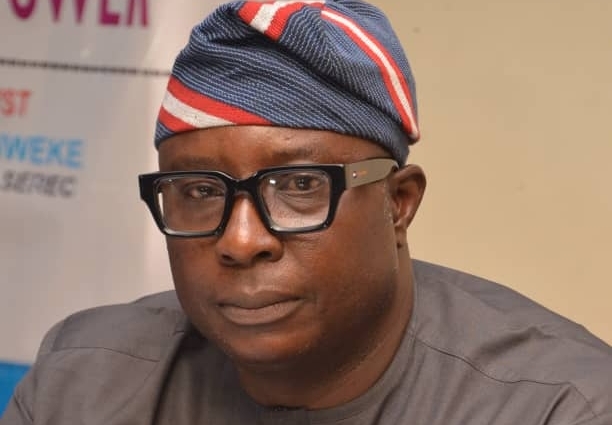
Captain Ladi Olubowale, President of African Shipowners Association (ASA), drew the attention of government and the nation’s maritime managers to this gloomy picture in a lecture he delivered at PortNews Newspaper Summit 2025 in Lagos on Thursday, November 6.
The theme of the summit/30th anniversary of the newspaper was “Nigeria’s Shipping Carriage Gaps, CVFF and Fading Manpower.”
A long standing freight forwarder and Head of Research, Sea Empowerment and Research Centre (SEREC), Forwarder Eugene Nweke reviewed the theme of the lecture.
Captain Ladi Olubowale maintained that manpower development is crucial in shipping and it is one of the things that Cabotage Vessel Financing Fund (CVFF) was designed to address through the granting of loans to qualified investors to acquire ships.
Olubowale, who is also the Managing Director/CEO of Seamate Maritime Integrated Services Limited, pointed out that the delay in the disbursement of the CVFF poses a serious challenge to the nation and her blue economy industry

“Without manpower, ships are just steel floating on water. It is people, Nigerian people, who make vessels operate, ports function, and logistics move. We must rebuild the seafarer pipeline through structured cadetship programs, scholarship bonds, and employment quotas linked directly to CVFF financed vessels,” said he.
Chronicling the past history of shipping in Nigeria, ASA President said it was a glorious and respected period for Nigeria when her national shipping lines such as Nigerian National Shipping Line (NNSL) was sailing the sea globally with the national flag of the country.
“I will take us back to where we once stood tall, reflect on where we are now, and chart a bold course for where we must go. There was a time when the green-white-green flag sailed proudly across global waters. The Nigerian National Shipping Line (NNSL) operated a fleet of 21 vessels, crewed and managed by Nigerians. We were respected across Africa and the world. That era built a maritime identity, a generation of Nigerian officers, engineers, and seafarers who made us proud.
“But by 1995, it was gone. Mismanagement, policy inconsistency, and lack of reinvestment left a void, one we have struggled to fill for nearly three decades,” said Olubowale, who pointed out that foreign shipping lines have dominated our waters as Nigerian-owned vessels carry less than 10% of 150 million tonnes of cargo Nigeria produces annually.
“Today, Nigeria moves over 150 million tonnes of cargo annually; crude oil, gas, containers, and dry bulk. Yet less than 10% of that trade is carried by Nigerian-owned vessels.
“Foreign shipping lines dominate our trade. This means billions of dollars in freight revenue leave our economy every year. In 2023 alone, freight payments exceeded $9 billion, mostly earned by non-Nigerian operators.
“This dependence makes us vulnerable to global shocks and limits our economic sovereignty,” said he.
On the carriage gap, he has this to say “The difference between the cargo we produce and the cargo we carry. Nigeria exports oil, LNG, and agricultural products. Yet our shipping presence is minimal. We have become cargo owners without shipping power. This gap weakens our trade balance, employment base, and technical capacity.
Related Posts

“Every vessel we don’t own represents lost jobs, lost taxes, and lost experience.”
Captain Olubowale urged the Ministry of Marine and Blue Economy and the Nigerian Maritime Administration and Safety Agency (NIMASA) to disburse the fund, and posited that If CVFF is used transparently and strategically, it can bridge the carriage gap and rebuild our maritime pride.
“The Cabotage Vessel Financing Fund (CVFF) was created to help Nigerian shipowners acquire vessels.
Today, that fund holds significant potential, built from the contributions of Nigerian operators. It was designed to be recycled back into the industry to promote ownership and national carriage capacity.
Recent efforts by the Ministry of Marine and Blue Economy and NIMASA to finally disburse the CVFF represent a turning point. If used transparently and strategically, it can bridge the carriage gap and rebuild our maritime pride.”
He therefore called for transparency and quick disbursement of fund, saying “We must ensure that CVFF loans go to real operators; those with the technical capacity, management experience, and employment commitment to make the vessels work.
“Every disbursed dollar must create ships, jobs, and cadet berths. That is how you build national shipping power sustainably.
“When Nigerians operate Nigerian ships, the value chain expands domestically. More taxes stay home, more jobs are created, and local businesses; from ship chandlers to port services grow.
Each new vessel creates an average of 40 direct jobs and 200 indirect jobs in the maritime economy. Imagine what 50 new Nigerian-owned vessels could mean.
“The revival of Nigerian shipping cannot be achieved by government alone. It requires blended financing; public, private, and development finance working together. It requires that our laws support competitiveness, our banks understand maritime risk, and our training institutions are revitalized. We must think beyond Cabotage to true national shipping participation in global trade.”
On the future of the nation, Olumuyiwa who is the Managing Director of Seamate advised the nation not to only produce cargo but must participate actively in the movement of her cargo to anywhere in the world. The country must also train her young ones, invest in green and LNG-powered vessels, and position our fleet within the African Continental Free Trade Area (AfCFTA) logistics network.
“If the NNSL gave us pride in the past, the new Nigerian fleet must give as prosperity in the future. A fleet of Nigerian-owned, Nigerian-crewed vessels, supported by CVFF and modern financing can redefine our place in global shipping.
“The Ocean will always move. The question is, will Nigeria move with it?
“We have the knowledge. We the people. And now through CVFF, we have the means. Let us not miss this tide of opportunity,” he submitted.
Theme Review
Reviewing the theme, Forwarder Eugene Nweke said Nigeria is a maritime-dependent economy — over 90% of trade moved by sea but indigenous shipping participation is less than 5%.
Nweke said it was unfortunate that Nigeria’s shipping carriage capacity has stagnated despite enabling policies and attributed this to a lack of implementation of the Cabotage Act (2003) by the government.
He said this has caused decline in fleet ownership by Nigerians – From 24 (2005) to less than 4 active vessels (2024), foreign dominance: 95% of cargoes carried by foreign liners and capital freight revenue flight: Estimated annual loss of $6–8 billion.
“The gap is not from legislation but from weak governance and coordination. Without carriage, CVFF is idle. Without CVFF, fleet renewal is impossible. Without fleet, manpower fades. Nigeria risks losing its global manpower competitiveness.
“CVFF, with over $350 million accrued, must transition from policy limbo to economic stimulus,” Nweke advised.