
Customs FOU intercepts smuggled goods worth ₦6.19 billion duty
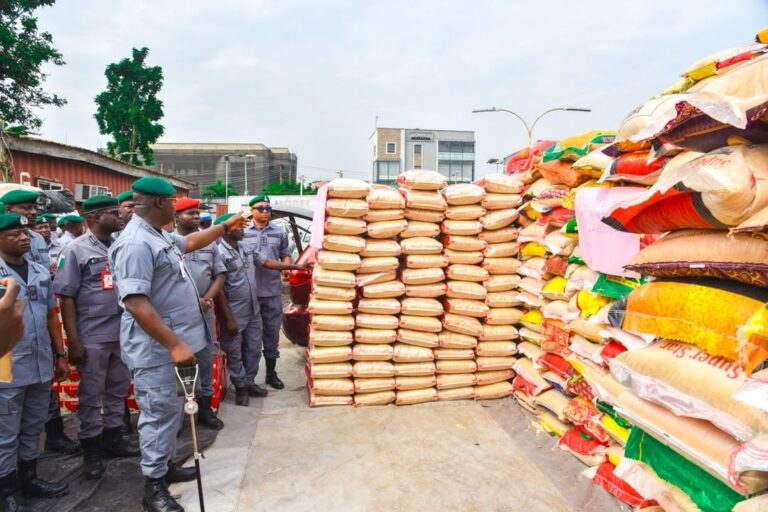

The Federal Operations Unit Zone A of the Nigeria Customs Service says its officers, within a four-week intensified enforcement operations, intercepted prohibited and restricted goods with a Duty Paid Value (DPV) of ₦6,194,695,947.05 and recovered ₦683,661,304.05 through the issuance of Demand Notice (DN)
The Acting Comptroller of the Unit, Oladapo Afeni said the ₦683,661,304.05 DN was made possible through intensified compliance checks, scrutiny of import declarations and correction of under-valuations between September 30 and November 3, 2026.
Afeni disclosed this development at Ikeja, Lagos, renewing the commitment of the Unit to suppressing smuggling, protecting government revenue and safeguarding Nigeria’s economic and security interests.
He said the Unit, under his leadership, had streamlined internal processes, strengthened intelligence-driven enforcement, improved surveillance, enhanced risk-based examination and deepened cooperation with relevant government agencies and stakeholders.
According to him, the operational philosophy of the new leadership is anchored on professionalism, firm enforcement of Customs laws, facilitation of legitimate trade and ensuring that individuals involved in economic sabotage face the consequences of their actions.
Providing a breakdown of the enforcement achievements, Afeni disclosed that operatives of the Unit intercepted 195 smuggling attempts involving prohibited and restricted items within four weeks.
The total Duty Paid Value of the seized goods, he said, stood at ₦6,194,695,947.05.
Among the intercepted items were large quantities of foreign rice, narcotics, frozen poultry products, spaghetti, used clothing, used tyres, petroleum products, pharmaceutical preparations and other restricted imports.

The seized rice comprised 3,028 bags of 50kg, 995 bags of 25kg, 104 bags of 20kg and 207 bags of 5kg.
The Unit also intercepted 5,986 parcels of Cannabis sativa and Cannabis indica, weighing a combined 3,407.83kg, representing one of the major highlights of the operation.
Other seized food products included 173 cartons of imported frozen poultry products, 6,949 cartons of smuggled spaghetti, 20 cartons of couscous, 101 bags of imported sugar weighing 50kg each, eight bags of imported powdered creamer milk weighing 25kg each and 12 bags of grain oat products weighing 25kg each.
Also intercepted were 459 bales and 39 jumbo sacks of second-hand clothing, 1,236 pieces of used tyres, 33 used rims and 8,025 litres of Premium Motor Spirit (PMS).
In the area of pharmaceutical and controlled substances, the operatives seized 57 cartons, 37 packs and six pieces of Codeine Syrup, alongside 400 grammes of cocaine and 100 grammes of methamphetamine.
The seizures further included eight live pangolins, 1,250 rounds of 12-calibre cartridges of Red Star brand, 250 cartons of Lotus sardines without NAFDAC registration numbers and 21 foreign-used vehicles, popularly known as Tokunbo.
The Unit also intercepted 11 means of conveyance allegedly used in facilitating the smuggling activities. It also seized a 40-foot container with registration number SEGU 5347239, containing 2,760 pieces of office chairs in Completely Knocked Down (CKD) form.
Related Posts

23,220 pieces of new matchets allegedly being smuggled into the country without the requisite certificates and permits were seized.
Afeni expressed particular concern over the volume of cannabis intercepted, warning that the circulation and consumption of illicit drugs posed serious threats to public health, family stability, youth development and national security.
Afeni explained that the dangers associated with illicit drugs extend beyond individual users, as substance abuse can disrupt families, encourage social vices and place additional pressure on the nation’s healthcare system.
He noted that the interception of the 3,407.83kg cannabis consignment would significantly disrupt the supply chain, deny criminal networks proceeds from illegal sales and prevent the substances from reaching potential consumers.
“These seizures go beyond mere statistics. They represent revenue recovered for the Federation, local industries protected, and lives saved from dangerous and substandard goods,” he stated.
He added that the Unit would not measure its success solely by the quantity of goods intercepted but also by the extent of harm prevented through its operations.
On the matchets, Afeni expressed concern over the potential security implications of the consignment, particularly against the backdrop of preparations for forthcoming elections.
He warned that the unauthorized movement of such items into the country could create security challenges if they were diverted for violent activities.
The Acting Comptroller said the Unit had deployed teamwork, professionalism and improved intelligence gathering to identify attempts by some importers and agents to evade appropriate Customs duties.
He assured legitimate importers, licensed Customs agents and other members of the trading community that the Unit would continue to distinguish between lawful commercial activities and fraudulent practices.
According to him, the Federal Operations Unit remains committed to facilitating legitimate trade while ensuring that individuals who deliberately falsify declarations, evade duties or engage in activities capable of undermining national security are dealt with in accordance with the law.
He identified the National Drug Law Enforcement Agency (NDLEA), Nigeria Police Force, Department of State Services (DSS), Nigeria Immigration Service, Nigerian Army, National Agency for Food and Drug Administration and Control (NAFDAC) and National Environmental Standards and Regulations Enforcement Agency (NESREA) among the agencies collaborating with the Unit.
He explained that the complexity of modern cross-border criminal activities made it impossible for any single enforcement agency to tackle the challenges independently.
The Unit has continued to promote joint operations, intelligence sharing, capacity building and coordinated enforcement strategies with relevant government institutions.
Afeni disclosed that seized narcotics and suspects would be handed over to the NDLEA for further investigation and possible prosecution, while other prohibited items would be transferred to the appropriate regulatory and enforcement agencies in line with their statutory responsibilities.
He said the collaboration was designed to dismantle criminal networks, secure Nigeria’s borders, protect communities and defend the national economy.