
Nigeria Customs, US Chamber of Commerce deepen bilateral relations on trade facilitation
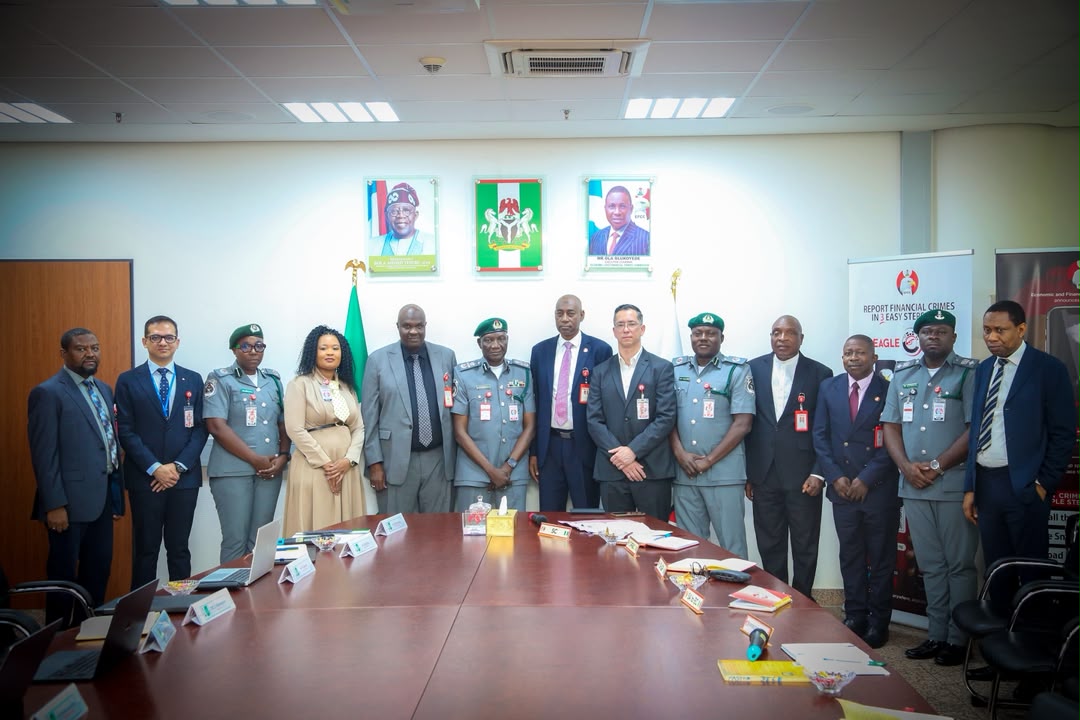

The Nigeria Customs Service (NCS) has strengthened business relations and enhanced trade facilitation with the US Chamber of Commerce, the US-Africa Business Centre (USAfBC), and the American Business Council (ABC)
Speaking at a quarterly meeting with the US trade delegations in Abuja, Comptroller General of Customs Adewale Adeniyi said the meeting vwill strengthen collaboration and economic cooperation between Nigeria and the United States.
Represented by the Deputy Comptroller General of Customs in charge of Tariff and Trade, Caroline Niagwan, reaffirmed the Nigeria Customs Service’s commitment to institutional reforms, operational efficiency, digital transformation, and enhanced stakeholder engagement.
She stated “Our objective is to build a modern, transparent, and responsive Customs administration that facilitates trade while ensuring effective revenue collection, border security, and compliance with applicable rules and regulations.”
She added that the visit offers an opportunity to exchange perspectives, address emerging concerns, and strengthen the partnership between the Service and American businesses operating in, or seeking investment opportunities in, Nigeria.
She emphasised that “predictable customs procedures, transparent tariff administration, timely cargo clearance, as well as effective dispute resolution mechanisms, are essential to improving the ease of doing business and enhancing investor confidence.”
The Deputy Comptroller General of Customs in charge of the ICT/Modernisation Department, Oluyomi Adebakin, highlighted the automation of licence and permit applications. He pointed to the planned deployment of 22 additional scanners across seaports, airports, and border stations, along with the introduction of digital platforms to streamline operations. The Service also emphasised its transition towards paperless administrative processes, urging the business community to provide feedback to help identify challenges and improve service delivery.
Speaking, Kendra Gaither, President of the US-Africa Business Centre at the US Chamber of Commerce, applauded the Service for its contributions to Nigeria’s economic development, noting that their work often goes unnoticed when operations run smoothly. “When Customs works well, when trade is facilitated, people are the ultimate beneficiaries,” she said.

Gaither noted that effective Customs operations remain critical to advancing investment opportunities in agriculture, energy, critical minerals, healthcare, and the digital economy, while expressing appreciation for the continued collaboration between the NCS and the American business community.
The Chief Executive Officer and Executive Secretary of the American Business Council Nigeria, Margaret Olele, commended the Service for its progress in trade facilitation, transparency, and stakeholder engagement. She congratulated the Service on its emergence as a top-ranked agency in the Presidential Enabling Business Environment Council (PEBEC) Compliance Assessment.
Related Posts

The Council highlighted improvements in the Authorised Economic Operator (AEO) Programme, Advance Rulings, and dispute resolution, noting that quarterly engagements have helped resolve longstanding business challenges.
Customs Strengthens Inter-Agency Collaboration with Six Agencies to Tackle Money Laundering
The Nigeria Customs Service (NCS) has engaged six federal government agencies to strengthen inter-agency collaboration in tackling cross-border illicit financial flows, money laundering, corruption, drug trafficking, terrorism financing, and other related offences.
The three-day visit, held from 27 to 29 October 2026, was led by the Assistant Comptroller-General in charge of Headquarters, Muhammad Shuaibu. It focused on deepening strategic cooperation and intelligence sharing among the agencies to combat financial crimes and other illicit activities.
The agencies include the Economic and Financial Crimes Commission (EFCC), the National Drug Law Enforcement Agency (NDLEA), the Nigeria Police Force (NPF), the Nigerian Financial Intelligence Unit (NFIU), the Nigeria Immigration Service (NIS), and the National Counter-Terrorism Centre under the Office of the National Security Adviser (ONSA).
Speaking during the engagements, Shuaibu expressed that the initiative was aimed at enhancing inter-agency coordination in addressing threats to Nigeria’s economy and national security. “The sole objective of this mission is to effectively detect and disrupt cross-border illicit financial flows. The measures include field visits to selected border stations to assess practical Customs control measures and engage with relevant agencies.” Shuaibu Said.
In his remarks, the Chief Executive Officer of the NFIU, represented by the Chief Operating Officer, Intelligence Security Service Sector, Muhammed-Mustapha, commended the Nigeria Customs Service for its efforts in combating smuggling and reinforcing border security. He also noted the longstanding relationship between the two institutions. “When NFIU was created, NCS was the first to collaborate with us. No particular agency understands things better than how Customs does globally,” Mustapha said.
Meanwhile, the World Customs Organisation (WCO) Mentoring Team, led by Shahiduzzaman Sarkar, interacted with the agencies on approaches to addressing Anti-Money Laundering (AML) and Countering the Financing of Terrorism (CFT). The team also called for stronger collaboration with the NCS to ensure the success of the initiative.
During the engagements, participants identified communication gaps, bureaucracy and database privacy concerns, among others, as impediments to effective inter-agency collaboration. The discussions also explored measures to address these challenges and strengthen institutional synergy.
The engagements also featured the presentation of NCS awards and WCO certificates to the agencies, demonstrating the Service’s commitment to enhance collaboration in tackling threats to Nigeria’s economy and national security.