


2026: National economy to witness improvement in growth – LCCI
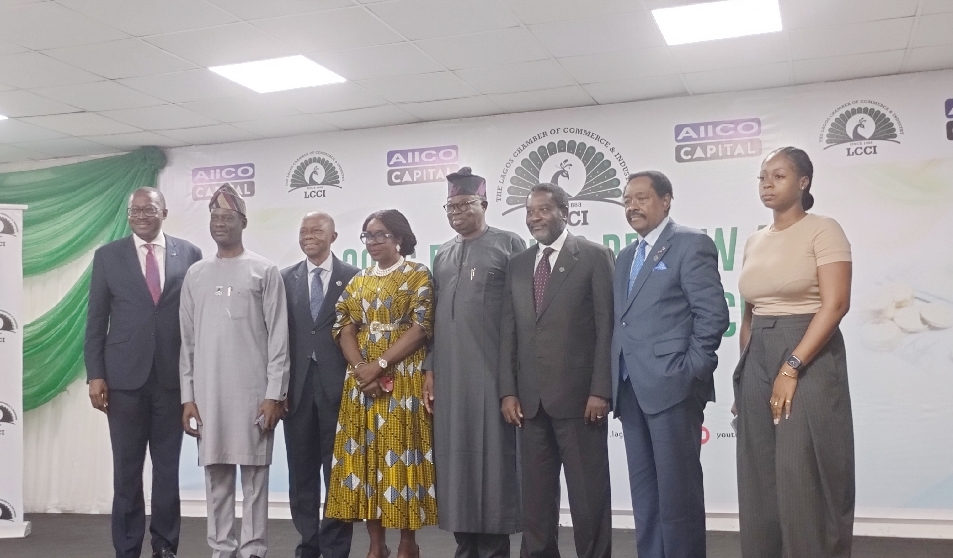

The Lagos Chamber of Commerce and Industry (LCCI) has stated that the national economy in 2026 would witness moderate growth but based on a productive private sector and government’s policy consistency, regulatory clarity, infrastructure delivery and disciplined budget execution.
LCCI maintained that the growth would be driven by agriculture, construction, energy, telecommunications, and the digital economy while interest rates would ease gradually as inflation moderates, creating space for private‑sector credit expansion.
The LCCI President, Engineer Leye Kupoluyi, projected this growth in his opening remarks at the LCCI 2026 Economic Review and Outlook Conference in Lagos on Thursday January 15, 2026.
Engineer Leye Kupoluyi maintained that the business community needs economic intelligence and industry insights to inform decisions and take action in the face of rising levels of uncertainty and disruption in supply chains and tariff wars.
He said the year 2026 stands at the intersection of reform, resilience, and renewed opportunity, pointing out that the financial sector is undergoing a necessary recalibration.
According to him, “In the face of rising levels of uncertainty and disruptions in supply chains, tariff wars, geopolitical tensions, and oil prices staying below expectations, as well as the threat of food security crises, the business community needs economic intelligence and industry insights to inform decisions and take action.
“We are meeting at a defining moment. The year 2026 stands at the intersection of reform, resilience, and renewed opportunity. The past few years have tested households, businesses, and institutions alike. Yet, history teaches us that economies do not transform in moments of comfort, but in periods of challenge, when difficult choices are made, reforms are sustained, and confidence is rebuilt deliberately.
“As we review economic performance and look ahead, it is essential to base our conversations on facts. Recent data confirms that Nigeria has begun to stabilize after a prolonged period of macroeconomic stress.
Related Posts


“Examining the major economic indicators from recent quarters of 2025 reveals a period of challenging reforms, including the removal of fuel subsidies, adjustments in the foreign exchange market, tighter monetary policy, and institutional restructuring. While these reforms imposed short-term costs, they are laying the foundation for a more transparent, market-driven, and resilient economy.”
Adding “The anticipated listing of major national assets, including large energy and industrial players, alongside reforms such as the transition to T+2 settlement cycles, the enactment of the Investment and Securities Act, and Nigeria’s exit from the FATF grey list, have collectively strengthened market credibility and reduced systemic risk.
“The financial sector is undergoing a necessary recalibration. The banking and insurance sector recapitalization initiatives, though demanding, are designed to strengthen balance sheets, protect consumers, and position financial institutions to support larger-scale investments.”
On the outlook for the year, Kupoluyi said “As we look ahead, the outlook for 2026 is one of measured optimism. Growth is expected to improve moderately, driven by sectors such as agriculture, construction, energy, telecommunications, and the digital economy. Interest rates are projected to ease gradually as inflation moderates, creating space for private‑sector credit expansion.
“For the private sector, competitiveness in 2026 will be defined by productivity, innovation, governance, and access to finance. For the government, success will depend on policy consistency, regulatory clarity, infrastructure delivery, and disciplined budget execution. For both, collaboration is no longer optional; it is essential.”
He said the LCCI remains unwavering in its belief that sustainable economic growth must be private-sector-led, productivity-driven, and people-centred.
According the him, “In line with this conviction, our advocacy will continue to prioritize the improvement of the ease of doing business and regulatory efficiency; the strengthening of micro, small, and medium-scale enterprises as critical engines of employment, innovation, and inclusion; the enhancement of trade facilitation, logistics, and industrial competitiveness; and the promotion of digital transformation, skills development, and innovation.”
The Chairman of the Presidential Committee on Fiscal Policy and Tax Reforms, Mr. Taiwo Oyedele, was among the guest speakers. He addressed the hottest topics surrounding the implementation of the new tax laws.