

Nigeria exports goods worth ₦136.65 trillion – CGC Adeniyi
Commissions Nigeria-East/Southern Africa Air Cargo Corridor Trade Route

The Comptroller General of Customs (CGC), Nigeria Customs Service, Adewale Adeniyi, has disclosed that Nigeria in 2024 facilitated exports valued at ₦136.65 trillion, a 219.5% increase from the previous year.
CGC Adeniyi added that Q1 2025 exports saw a further 349% surge compared to the same period in 2024, underscoring Nigeria’s increasing dominance in regional exports.
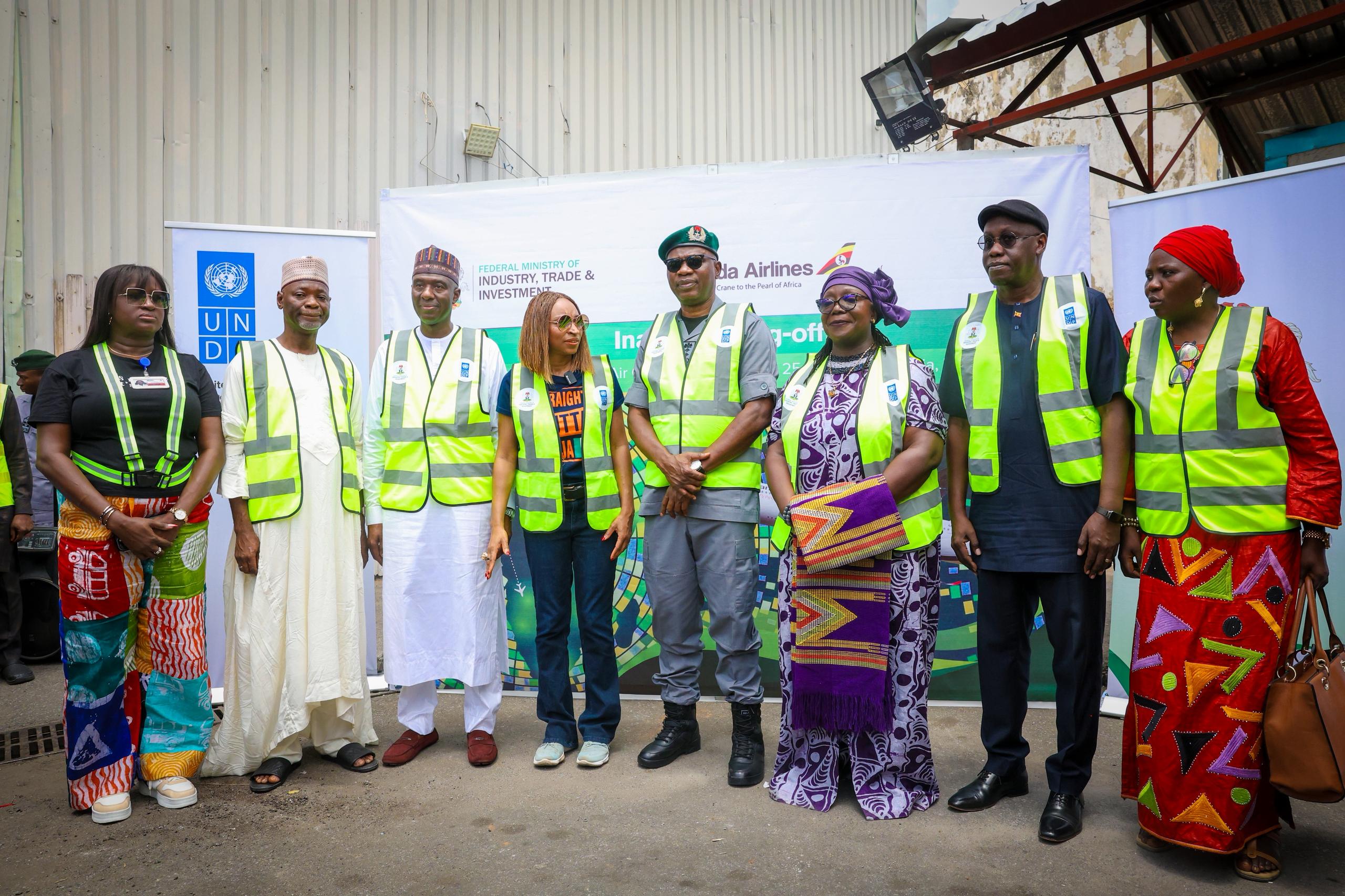
Adeniyi made this disclosure while flagging off the inaugural Nigeria–East/Southern Africa Air Cargo Corridor, facilitating regional trade and continental integration under the African Continental Free Trade Area (AfCFTA) framework on Sunday, May 25, 2025.
The flag off, done in collaboration with the Federal Ministry of Industry, Trade and Investment at the Nnamdi Azikiwe International Airport, Abuja, was attended by the Minister of Industry, Trade and Investment, Dr Jumoke Oduwole, and Ms Adebola Agunbiade, Director of Commercial and Business Development, Federal Airports Authority of Nigeria (FAAN), who represented the Managing Director/CEO, Mrs Olubunmi Kuku.
CGC Adeniyi described the flag-off as a strategic breakthrough that aligns with President Bola Ahmed Tinubu’s Renewed Hope Agenda and underscores Customs’ leadership in AfCFTA implementation.
“This is more than a ceremonial handover; it is a gateway to new opportunities for Nigerian businesses and proof that we are ready to lead Africa’s economic transformation through trade,” he said.
He revealed that as part of Customs’ commitment to supporting the trade corridor, the Service has introduced several enabling instruments, including issuing AfCFTA Certificates of Origin, digitalising export processes, and creating dedicated AfCFTA units across Customs commands.
Commending the inter-agency collaboration that birthed the corridor, CGC Adeniyi urged other regional airlines and cargo operators to replicate the model across maritime, road, and rail routes.

“This corridor must not stand alone. It is a template for future trade networks connecting seaports, airports, and borders for the prosperity of our people,” he declared.
Related Posts

He also thanked development partners, including the United Nations Development Programme (UNDP), Federal Airports Authority of Nigeria (FAAN), and all logistics stakeholders, for their professionalism and support in executing the corridor.
“As we flag off this strategic route, we are flagging off a future of innovation, jobs, technology, and inclusive prosperity for the African continent,” the CGC concluded.
Hon. Minister Oduwole described the initiative as a practical policy action designed to fast-track Nigeria’s economic diversification through export trade.
“We are not just talking diversification, we are implementing it. Today’s launch signifies a turning point for our exporters, especially with the negotiated 50% freight rate reduction now in effect,” she said.
She added that the Ministry would continue to support Nigerian businesses in scaling up value-added production and market access under the AfCFTA platform.
The event’s highlight was the symbolic loading and handover of Nigerian export cargo to Uganda Airlines, signifying the operationalisation of the corridor. The Country Manager of Uganda Airlines, Patrick Ziwa, received the cargo, commending Nigeria’s leadership in air cargo innovation within Africa.
“This is a strong statement by Nigeria to other African nations that regional trade is not just a vision it is already in motion,” Ziwa said.
Following the cargo loading, AfCFTA Certificates of Origin were issued to a group of compliant Nigerian exporters, enabling them to access preferential tariff regimes across the East and Southern African markets.
In her remarks, Ms Adebola Agunbiade reaffirmed FAAN’s commitment to providing infrastructure and policies supporting air cargo efficiency.
“FAAN, under the leadership of Mrs. Olubunmi Kuku, is fully aligned with the national export strategy and will continue to make our airports drivers of economic development,” she stated.