

Customs extends overtime cargo clearance to 120 days
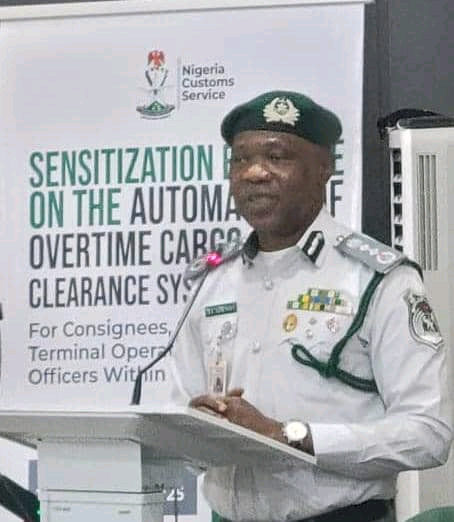

The Nigeria Customs Service (NCS) has extended overtime cargo clearance automation from 90 days to 120 days with a view to speed up cargo clearance, reduce delays, and enhance trade facilitation across the country.
Comptroller-General of Customs, Bashir Adeniyi, announced the development on Monday during a one-day sensitisation programme held in Lagos for stakeholders in the maritime and logistics sector. The event brought together consignees, brokers, terminal operators, shipping companies, and customs officers within Zone ‘A’.
Adeniyi explained that the automation initiative was born out of the need to address the constant delays caused by abandoned consignments and the bureaucratic bottlenecks of clearance extensions. He disclosed that nearly half of the correspondence to his office daily is tied to requests for such extensions.
With the upgraded system, cargo clearance requests will now be processed digitally, cutting out unnecessary paperwork and manual interventions. “We have created a help desk at the headquarters to prioritise clearance of project cargoes belonging to government agencies,” Adeniyi revealed.
The Customs boss emphasised that the reform is not just about generating revenue but also about strengthening Nigeria’s position in international trade. “Importation is critical to Nigeria’s economic development. Our goal is to ensure that goods reach their rightful owners quickly and efficiently,” he said.
He noted that less than one per cent of cargoes arriving at Nigerian ports in 2024 were classified as overtime, and expressed confidence that the automation system would eliminate the issue entirely.
Adeniyi also pledged that sensitisation sessions would continue across different zones to ensure that stakeholders adapt smoothly to the new process. He urged shipping companies, terminal operators, and clearing agents to give constructive feedback to aid further improvement.
Highlighting the reasons behind abandoned cargoes, he explained that while some consignments are intentionally left behind, others suffer delays due to poor connectivity and technical issues. The new automation programme, he said, was developed to resolve such barriers.
Related Posts


“This sensitisation is to ensure all stakeholders understand the system and work together for its success. The Overtime Cargo Automation programme is fully developed and ready for deployment,” Adeniyi stressed.
Supporting the CG’s remarks, Assistant Comptroller-General of Customs, Isah Umar, said the e-clearance system would streamline operations, boost transparency, and drastically reduce human interference. He added that the system also strengthens data integrity for both imports and export.
Umar further explained that the process includes automatic recordkeeping of cargo disposal and harmonised documentation through the Single Goods Declaration (SGD), eliminating duplication of paperwork.
Chief Superintendent of Customs, Aliyu Abdulkadir, reminded stakeholders that the Nigeria Customs Service Act 2023 mandates the disposal of overtime cargoes after 120 days. He clarified that perishable and inflammable goods may be disposed of immediately through e-auction or other approved channels to prevent hazards.
In his technical presentation, Assistant Comptroller Ibrahim Muhammed broke down the ICT framework of the new system. He explained that cargoes are deemed overtime after 30 days, with clearance escalated progressively from Area Controllers to zonal levels, and finally to headquarters if unresolved.
He stressed that the automation will provide a transparent and accountable structure for handling overtime consignments while reducing opportunities for compromise.
Wrapping up the event, Zonal Coordinator of Zone ‘A’, Assistant Comptroller-General Muhammed Babadede, lauded the Comptroller-General for leading digital reforms, describing NCS as the most technologically advanced Customs administration in West and Central Africa.
The sensitisation session ended with an interactive discussion where stakeholders sought clarifications, while Customs management reassured them of continuous engagement to ensure seamless implementation of the automation reform.