
FG should hand over airports to concessionaires – Bismark Rewane

By Gboyega Oni
Concession to private investors is the only viable recipe for a sustainable and profitable airports management in the aviation industry in Nigeria
The Federal Government is also advised to focus more on policy formulation and regulation rather than running airlines or building new airports directly.
This counsel formed parts of the recommendations listed by a financial expert, Mr Bismark Rewane, for the Federal Government to adopt in financing the nation’s aviation industry. Rewane spoke at the 29th Annual Conference of League of Airport and Aviation Correspondents (LAAC) held on Thursday, August 7, 2025 in Lagos.
The theme of the conference was Financing Aviation in Nigeria: Risks, Opportunities and Prospects.
While making a presentation on the theme, Bismark Rewane said the Nigerian aviation sector is in dire need of consolidation and a competitive hub system, preferably in Lagos and Abuja.
While reviewing the aviation trajectory in the country, Rewane called on the government to invest more in local Maintenance, Repair & Overhaul ( MRO) to save scarce forex from being expended needlessly on maintenance of aircraft abroad while considering a very strong and effective regulation for safety.
Pointing out that the nation’s aviation industry is fragmented, the financial expert noted that out of Nigeria’s 23 active domestic airlines, only 5 airlines control 75% of traffic flows as the industry is badly fragmented, while noting regrettably that, for the second consecutive year, domestic passenger traffic declined to 11.5mn in 2024.

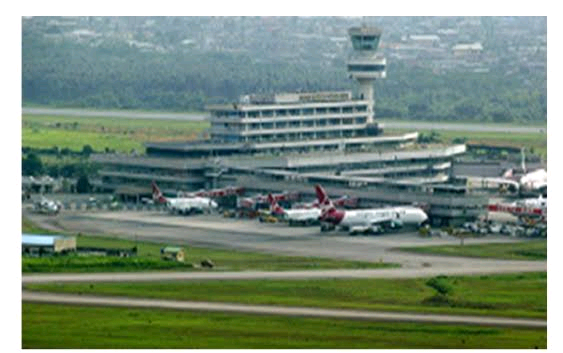
Rewane added that due to poor infrastructure, Nigeria’s aviation sector lost $3.5 billion in revenue as out of 32 airports in the country, only 20 were considered viable in 2024.
Related Posts

Speaking on the Financing Options for a Sustainable Aviation, Mrs. Mary Olowo- Sokeye, Chief Financial Officer – InterGuide Group (including Sabre? Central & West Africa), said Nigerian airlines and other stakeholders require money to operate, remain compliant in a highly regulated environment, stay competitive while prioritizing safety.
Mrs. Mary Olowo- Sokeye listed various funding methods which aviation operators could pick from to finance aviation infrastructure while informing that there is a Central Bank of Nigeria (CBN) Intervention to the tune of N300 billion fund to support the development of the power and airline sectors.
The financing options are: Traditional methods
Aircraft Loans: Secured by aircraft assets; common for carriers with strong balance sheets.
Leasing More flexible; options include: Dry Lease – Airline provides crew, insurance, and maintenance.
Wet Lease – Lessor provides aircraft, crew, maintenance, and insurance. Damp Lease – Hybrid arrangement Better cash flow management.
Capital Market and Equities
Equity Financing: Raising funds via investors or public listings (IPOs). Airlines raise capital by selling shares or bringing in investors Debt Financing:Issuing corporate bonds or taking institutional loans.
Asset-Backed & Sale-leaseback
Asset-Backed Financing: Loans secured against aircraft or other tangible assets.Sale & Leaseback Arrangements Unlock liquidity by selling aircraft and leasing
Export Credit-Backed Financing
Supported by Export Credit Agencies (ECAs) to mitigate lender risk.
She however counselled that the airlines need to consider market conditions, such as fuel prices, passenger demand, and economic conditions while applying for any of the financing methods.
Olowo- Sokeye urged airline operators to consider cutting costs without cutting corners in the areas of safety & human capital, training, expatriates, MRO – Maintenance, Repair & Overhaul, aircraft acquisition & leasing in the management of their business.