
How NPA is working to make Nigerian seaports competitive – Dantsoho
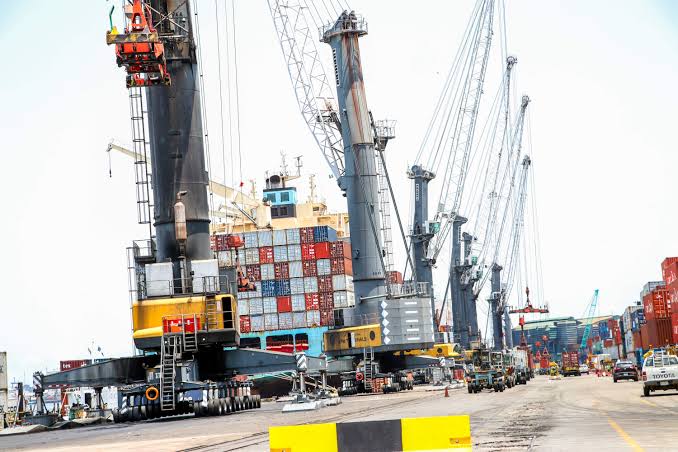

The Managing Director of Nigerian Ports Authority (NPA), Dr. Abubakar Dantsoho, has listed various efforts initiated by his administration towards repositioning and making Nigerian seaports competitive in Africa.
Dr Dantsoho made this known in a paper he presented at the Nigerian-British Chamber of Commerce (NBCC) Maritime and Logistics event in Lagos on Tuesday, March 4, 2025.
The theme of the event was “Improving the competitiveness of the Nigerian ports in an era of regional integration.”
The initiatives include Port Modernisation Project, Port Community System/National Single Window, Automation of Operations and Export Processing Terminals (EPTs).
Dantsoho who envisaged that intra-African trade will significantly increase with the collapse of trade barriers across Africa said it was therefore imperative that the Nigerian ports reposition to be competitive not to lose its gateway traffic to the ports.
He said “Our vision is to be the Maritime Logistics Hub for sustainable port services in Africa.
“In the quest for our nation to optimize the benefits accruable from AFCFTA, there is no gainsaying that port plays a pivotal role as a nodal point in international logistics. Given the fact that port cost is a significant component of freight cost, which ultimately affects the prices of goods in the market, this speaks to the imperativeness for our ports to be competitive and efficient.
“This requires strategic collaboration of every player in the port system for this to be actualized.”

He explained that port competitiveness is driven mainly by institutions, infrastructure and macroeconomics, saying strong institutions provide the regulatory and governance framework necessary for stable and predictable business operations; while infrastructure is a cornerstone of port competitiveness, influencing both operational efficiency and long-term strategic viability.
“The quality of infrastructure affects transport costs, trade efficiency, and overall competitiveness. Investments in inland terminals, logistic zones, and rail networks can expand a port’s influence beyond its traditional hinterland and bring about efficiency that makes the port competitive,” he said.
Related Posts

Similarly, the NPA MD, noted that the macroeconomic environment of a country is intricately linked to its ports’ performance and competitiveness, saying factors such as inflation, exchange rates, and economic stability influence trade flows and investments.
The NPA boss explained how the initiatives have impacted on the growth of the Nigerian seaports thus:
Port Modernisation Project
It is envisaged that modernization will position Nigerian ports at the edge of competition and improve efficiency, aside from the newly developed Lekki Deep Seaport, the remaining six ports in the country are grappling with decrepit infrastructure, ranging from silted channels to collapse breakwaters and quays. It is consequent upon this that the Authority has embarked on a port modernisation project, aimed at revamping the dilapidated infrastructure. The Lagos Port Complex and Tin Can Island Port Complex will serve as pilot projects.”
Port Community System/National Single Window
This is a digital collaborative platform that enables seamless exchange of information amongst the many port stakeholders and provides a platform for one-stop shop payments for all activities within the port ecosystem. This will reduce paperwork and administrative bureaucracy.
The NPA in collaboration with the International Maritime Organisation (IMO) is working towards the actualisation of this project. The Port Community System (PCS) is envisaged to culminate into the National Single Window (NSW) for maximum efficiency and competitiveness.
Automation of Operations
Port operations can only be automated with modern and strong infrastructure. For instance, in container operations, modern Ship-to-Shore cranes can only be deployed on strong quay aprons. Automation of our operations will be a major paradigm shift for our port efficiency. It is expected to reduce the turn-around-time of container vessels to hours instead of days.
The Lekki Deep Sea Port has been a game changer, saying with the commencement of its operation, NPA’s cargo and vessel traffic has gained traction along with the growth of transshipment traffic.
The country has a few new Deep seaport projects underway; the Badagry, Ibom, Calabar, etc. With the right and skilled manpower deployed to these new ports, Nigerian ports will certainly be competitive.
Export Processing Terminals (EPTs)
The NPA in collaboration with the Nigeria Customs Service approved the establishment of six Export Processing . All export cargoes are processed and certified fit before proceeding to the ports for loading on vessels. The establishment of the EPTs has seen our exports grow over time.
Truck E-Call up System (Trucks Transit Park/ Eto)
There is a correlation between port operation and hinterland evacuation of cargo, to clear the encumbrances in the port access corridor in the Lagos Pilotage District, the Authority engaged the services of Messrs. Trucks Transit Park (TTP) for real-time solution to the hitherto congestion caused by port bound trucks. Over 70,000 trucks have presently registered with the company, where they are electronically scheduled to deliver containers in the ports.