
Nigeria-UK port infrastructure deal should not be about ports alone – Expert

Nigeria must align her infrastructure investment with fleet ownership, cargo control, and capital strategy as those who own the ships and control the cargo define the market — not just those who build the ports.
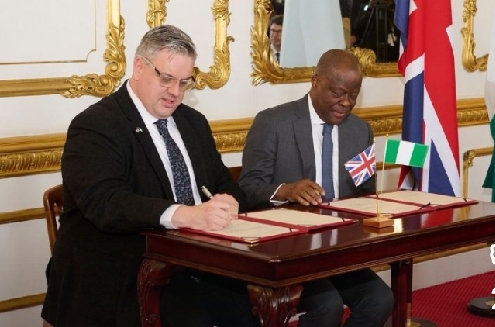
This is an assertion by a seasoned shipping operator and former President of African Shipowners Association (ASA), Captain Ladi Olubowale, while reacting to the £746 million deal signed by Nigeria and the UK for port infrastructure in Nigeria.
Describing the deal as a defining moment for Nigeria’s maritime and blue economy ambitions, Captain Ladi Olubowale said it should not be just about ports alone but a deal positioning Nigeria as a globally competitive logistics and energy hub.
Olubowale noted that Nigeria could not continue to invest in port upgrades, decarbonisation, and efficiency but must ensure that value capture does not remain externalised.
He said a significant portion of the maritime value chain from vessel ownership, chartering, cargo control, to freight earnings is still dominated by foreign operators, which has created a structural imbalance.
Captain Ladi Olubowale asked of what needs spending reactivating old ports, what is a modern, green port without ships under national or regional control?
“The recent £746 million Nigeria-UK port infrastructure deal marks a defining moment for Nigeria’s maritime and blue economy ambitions.
“This is not just about ports. It is about positioning Nigeria as a globally competitive logistics and energy hub.

“However, there are critical strategic questions we must confront: What the needs of spending reactivating old ports, what is a modern, green port without ships under national or regional control?
“While we continue to invest in port upgrades, decarbonisation, and efficiency, we must ensure that value capture does not remain externalised.
Related Posts

“Today, a significant portion of the maritime value chain from vessel ownership, chartering, cargo control, to freight earnings is still dominated by foreign operators. This creates a structural imbalance: We host the infrastructure. We generate the cargo. But we export the value, we are positing our value chain as transit corridor!”
Captain Olubowale, who is currently serving as a Member of the Board of Directors at Seamate Group Africa, said If Nigeria is to fully benefit from this landmark investment, Nigeria must transit to a maritime value chain controller, maintaining that this requires coordinated action.
“This must change. A Strategic Rethink is urgent. If Nigeria is to fully benefit from this landmark investment, we must transition from being: A transit corridor to A maritime value chain controller. This requires coordinated action across:
1. Indigenous Fleet Development: We need deliberate policies and financing structures to support: Crude, product, and LNG carriers under Nigerian or African ownership Long-term charter frameworks backed by cargo guarantees.
2. Cargo Control & Trade Structuring Without control of cargo, there is no control of freight economics. Strategic offtake agreements, SPA frameworks, and trading participation must be prioritised.
3. Maritime Finance & Leasing Ecosystem: Access to capital remains the biggest barrier. We must unlock: Structured finance (leasing, SPVs, export credit) Sovereign-backed maritime funds Public-private shipping platforms
4. Integrated Logistics Platforms Ports alone are not enough. We need end-to-end capabilities: Storage, floating assets (FSUs/FS0s) Coastal distribution networks Regional trading hubs across West Africa.
“The opportunity ahead this UK partnership should not only modernise infrastructure —it should catalyse a new generation of Nigerian maritime champions.
“The goal is clear: Retain freight value within the economy, Build globally competitive shipping capacity, Position Nigeria as the maritime gateway of West Africa.
“To policymakers, financiers, and maritime industry leaders: Let us align infrastructure investment with fleet ownership, cargo control, and capital strategy. Because in global shipping, those who own the ships and control the cargo define the market — not just those who build the ports,” he concluded.