
Nigerian Shippers’ Council counsels stakeholders on Port Economic Regulation Laws
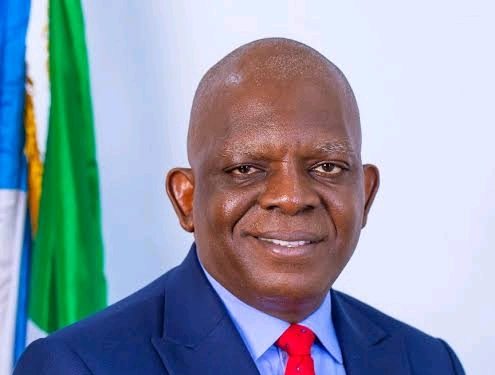

The Executive Secretary/CEO, Nigerian Shippers’ Council, Dr. Pius Ukeyima Akutah, has counselled port stakeholders to recognize the binding force of Ports Economic Regulations Laws and cultivate the habit of obeying such laws.
Akutah gave the counsel while speaking on “The Impact of Strong Laws in Achieving Port Economic Regulation In Nigeria” at a one day workshop and award presentation organised by the League of Maritime Editors in Lagos recently.
The theme of the lecture was ‘Nigerian Chairmanship of World Customs Organisation:The Impact on the Nation’s Economy.’
He said the critical stakeholders in the industry must acknowledge the binding force of these laws and accept that effective port economic regulation requires their full buy-in to such laws adding that only when stakeholders own the process and elevate economic regulation as a collective priority that trade can be facilitated and economic growth driven.
Akutah pointed out that no matter how strong and beautiful Nigeria’s laws are, they cannot serve the purpose for which they were created without effective implementation measures, saying implementation does not take place in a vacuum.
According to him, the regulator must also be perceived and respected as an impartial arbiter—ensuring equity and fair play among all industry players, adding that with collective commitment and trust, Nigeria can restore confidence in its shipping and ports sector, unlocking the vast potential of its marine and blue economy for national prosperity.
He stated that if this is done, the ports will move more cargo; the nation’s marine and blue economy sector will flourish while the harbours will impact positively on the economy.
Related Posts

The Shippers’ Council’s CEO said strong law is not an end in itself but an instrument for creating predictable markets, for not only protecting shippers and consumers but also regulating providers and users of shipping and port services for the purpose of attracting productive income.

To convert law into outcomes , he recommended the passing into law of the Nigerian Port Economic Regulatory Agency Bill — full stakeholder support, establishment of a data-driven monitoring programme — with quarterly KPI’s, adoption of state-support notification rules — for infrastructure projects.
He said this also includes Strengthening enforcement capacity — through investigators and a specialist dispute resolution stream as well as the enhancement of labour stability by fully implementing the MLC.
On Nigeria’s elevation to the WCO Council Chairmanship, he said it is a moment of moral and political authority, urging that the nation should use that authority to cement its domestic institutions with laws that are clear, enforceable, and oriented towards competition, transparency, customs trade facilitation, safety, labour stability, and long-term national prosperity.
He said Nigeria’s chairing of the WCO Council places the nation’s customs leadership at the centre of global best practice on trade facilitation and customs governance adding that this international leadership must be mirrored in the country through robust customs operations which will deliver little if the port economic framework remains permissive of rent-seeking and monopoly pricing.
Akutah disclosed that by pairing WCO leadership with domestic legal reforms Nigeria will demonstrate to multilateral partners and investors that it is committed to transparent, rule-based port governance; Improved trade facilitation outcomes — fewer delays, lower costs and better compliance.
The NSC boss stated that this also benefit customs revenue collection and national competitiveness; leverage international best practice, technical assistance and harmonised standards through the WCO platform for domestic reform.
He said the world is watching Nigeria, adding that credibility abroad will only be matched by credibility at home.