
Report: BOAN tables demands before Nigerian Shippers’ Council

In their quest for efficient barge operations in Nigerian seaports, the Barge Operators Association of Nigeria (BOA) has demanded for an enforcement of non-discriminatory access protocols across all terminals for its all members.
BOAN also demanded for standardization and transparency in tariff structures affecting barge operations.
Calling on the federal government to strengthening oversight to ensure fair competition within the port ecosystem, the association demanded for a formal recognition of barging as critical logistics infrastructure within port operations.
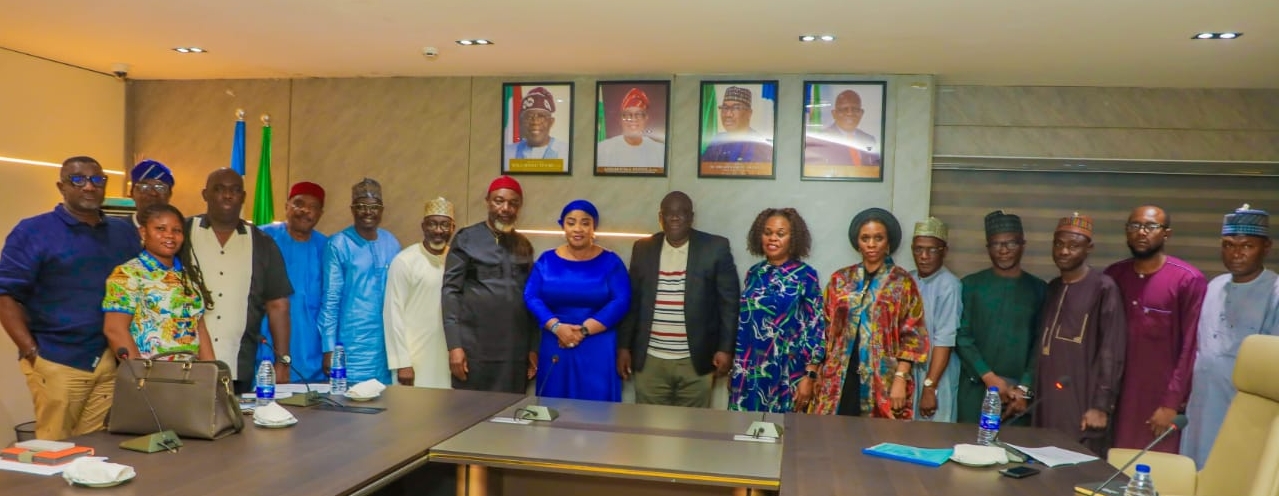
The BOAN demands are contained in the Barge Operational Challenges Reports submitted by the President of BOAN, Hon. Olubunmi Olumekun, along members of his executive and the Head of Centre of Research, the Sea Empowerment and Research Center (SEREC), Forwarder Eugene Nweke, to the Nigerian Shippers’ Council in Lagos today.
The SEREC is the technical partner for the BOAN.
Acknowledging BOAN theme leadership of the Nigerian Shippers’ Council for convening this important engagement, in compliance with the directive of the Honourable Minister, Adegboyega Oyetola, BOAN maintained that this intervention is both timely and necessary.
According to the report, from a technical and industry-informed standpoint, barging, as we all know, is no longer a peripheral activity—it is now a critical backbone of port logistics in Nigeria. It plays a pivotal role in: Decongesting our ports,Supporting multimodal transport and Enhancing supply chain efficiency
They noted that despite this strategic importance, indigenous barge operators are increasingly constrained by operational and structural challenges that require urgent regulatory attention.

At the core of the concerns brought forward are three fundamental issues:
Related Posts

First — Access.
There are growing concerns around unequal and, in some cases, restricted access to terminals and berthing windows, which undermines operational efficiency and distorts competition.
Second — Transparency.
The absence of clear, standardized tariff and operational frameworks creates uncertainty and exposes indigenous operators to avoidable cost pressures.
Third — Competitive Balance.
There is a perceived—and in some instances demonstrable—imbalance in operational treatment, particularly where foreign-linked interests appear to enjoy preferential conditions.
“Let us be clear—this is not a call for protectionism, rather, it is a call for fairness, transparency, and regulatory consistency.
“From a technical standpoint, including our ongoing work around barge-enabled liquid cargo transportation, the capacity and competence of local operators are not in doubt.
“What is required is an enabling environment that allows that capacity to be fully utilized.
“For emphasis sake, the need to fostering a level playing field for barge operators is not just an industry concern—it is a national economic imperative,” the report noted.
According to the report, if properly supported, barging will continue to reduce pressure on road infrastructure, lower logistics costs, create jobs, and strengthen Nigeria’s position within the blue economy.
BOAN therefore commended the Nigerian Shippers’ Council for this initiative and assured it of its commitment to constructive collaboration in achieving a more efficient, fair, and sustainable maritime sector.