

Stakeholders demand overhaul of tax treaties, stronger enforcement, and global fairness in tackling IFFs
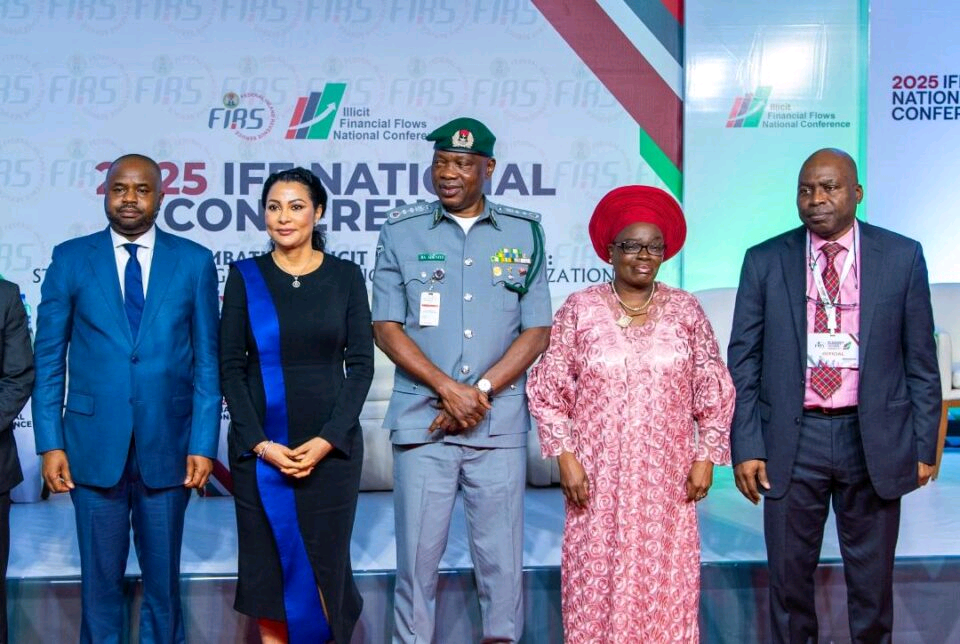

In what has been described as a crucial step toward fiscal justice and economic sovereignty, top government officials, financial experts, international partners, and civil society leaders gathered in Abuja on Tuesday to confront the growing threat of illicit financial flows (IFFs) draining Africa’s and Nigeria’s wealth.
The two-day national conference on IFFs, hosted by the Federal Inland Revenue Service (FIRS) under the theme “Combating IFFs: Strengthening Nigeria’s Domestic Resource Mobilisation”, opened at the Transcorp Hilton with urgent calls for reform, collaboration, and transparency.
In his opening address, Federal Inland Revenue Service (FIRS) Chairman, Zacch Adedeji, labelled IFFs—ranging from tax evasion and trade mis-invoicing to profit shifting and money laundering—as a structural drain on Nigeria’s economy, sabotaging infrastructure development, undermining governance, and deepening inequality.
“Each unaccounted dollar is not just a statistic, it represents a hospital that wasn’t built, a school that remains closed, and a promise to our people unfulfilled,” Adedeji declared.
He highlighted President Bola Tinubu’s commitment to fiscal reform, referencing the recent signing of four tax reform bills into law, but warned that legislation alone is insufficient. “We must build systems that are not only legal but also intelligent—driven by real-time data, taxpayer trust, and global cooperation,” he said.
Adedeji announced the establishment of a Tax Intelligence and Automation Department and a Directorate for Proceeds of Crime Management and Illicit Financial Flows Coordination under FIRS. These units, he said, are deploying advanced analytics, anomaly detection, and cross-agency partnerships to chase stolen wealth and close systemic loopholes.
Chairing the conference, Minister of State for Finance, Dr. Doris Uzoka-Anite, added urgency to the call, revealing Nigeria loses a staggering $18 billion annually to IFFs, largely through tax avoidance by multinational corporations.
“Too many foreign companies are doing business in Nigeria without paying their fair share. Our tax treaties, many of which were negotiated in outdated economic contexts, must be reviewed to reflect today’s reality and our sovereign interests,” she said.
Related Posts


While commending FIRS for its technology-driven reforms, she called for a coordinated inter-agency approach. “Laws are not magic wands. Without enforcement and alignment, they will sit idle,” she warned.
Adding a continental perspective, Hon. Irene Ovonji-Odida, a Ugandan lawyer and member of the Thabo Mbeki High-Level Panel on IFFs from Africa, shocked the audience with data: West and North Africa lost $407 billion to trade mis-invoicing alone in a decade, while the broader African continent has seen $1 trillion in IFFs in the last 50 years.
She broke down the origin of IFFs: 65% from tax avoidance through commercial activity, 30% from criminal activities, and only 5% from corruption. Ovonji-Odida emphasized that global financial rules—often shaped in Western capitals—favor secrecy and limit accountability.
“These aren’t just African problems; they’re global problems with local victims. Western complicity in crafting opaque financial systems is a major barrier to justice. Africa must build a common voice and push for fairness in global tax governance,” she asserted.
Bashir Adeniyi, Comptroller-General of the Nigeria Customs Service, echoed the call for collaboration. He highlighted challenges in enforcing anti-IFF protocols and recounted a major seizure of $8.3 million in cash at Lagos Airport during his tenure.
“Despite this success, global anti-money laundering bodies like the Financial Action Task Force (FATF) appeared more interested in money entering Nigeria than exiting it. We still haven’t received a satisfying answer to that contradiction,” Adeniyi noted.
He warned of the dangers of illegal mining and informal cross-border cash flows, stating that Customs and other law enforcement agencies need enhanced tools and unified action.
Across all panels and presentations, one message rang loud: IFFs are not abstract financial jargon. They are the theft of public wealth, a betrayal of national development, and a brake on Africa’s rise.