

What reasons for Panama Canal surcharges

Carriers are introducing Panama Canal surcharges to cover lost vessel capacity. But they won’t tell you that.
Container lines are starting to announce Panama Canal Adjustment surcharges, but, as usual, there is little context or justification provided to customers.
A $500 per teu ‘Panama Canal Adjustment Factor’ will apply from 10 September to all cargoes from the Far East to the US East and Gulf coasts that transit the Panama Canal. For some unexplained reason, shipments from Bangladesh to the USEC are exempt.
Other than that, there is no explanation of why the surcharge is being introduced.
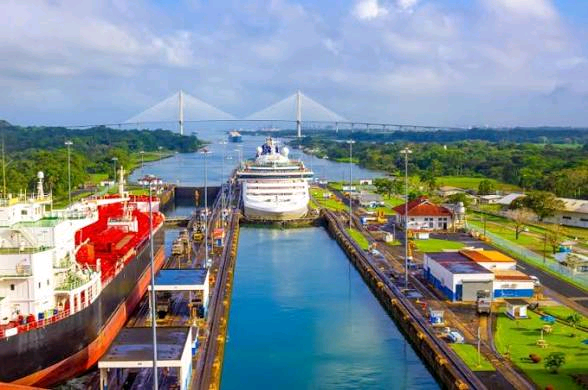
For those out of the loop, the Panama Canal Authority (ACP) has reintroduced a schedule of draft restrictions on the Neopanamax locks to safeguard water levels in Gatun Lake in anticipation of an extreme El Niño weather system.
The ACP has done something similar before (early 2023 through 2024), and the resulting scarcity of transit capacity sent auction fees for some non-container vessels soaring.
But there is an important difference this time around.
Crucially, the ACP has stated that the new measures “will not affect the number of daily transits.”

That is particularly relevant to container shipping, given that container vessels account for around 60% of all Neopanamax transits through the Panama Canal each month (see chart).
Panama Canal transits: Containerships
Note: * Only includes large commercial, those paying tolls greater than the minimum tariffs implemented on 1 June 1998. (Small commercial traffic not included); ACP’s financial calendar runs from October through September.
Related Posts

Source: Panama Canal Authority (ACP), Drewry Maritime Research
So, at face value, if the number of daily transits is unchanged, where is the justification for carriers’ surcharges?
It is all about cargo-carrying capacity.
A reduction in the maximum permitted draft means that vessels cannot necessarily be loaded as heavily as they could previously. The ship still makes its transit, but it may be carrying fewer containers.
The final scheduled restriction, to 47.5 feet from 3 September, compares with the standard 50-foot maximum draft. That is a 5% reduction in permitted draft, although the resulting loss of teu capacity will vary considerably by vessel, cargo weight and stowage.
In other words, the Panama Canal does not have to reduce the number of ships it accepts to reduce the amount of cargo it can accommodate.
That distinction seems to have been lost in the messaging.
A carrier operating a vessel through Panama could therefore face a combination of reduced cargo intake, higher costs per carried teu and potentially greater operational risk. A $500/teu surcharge may well be a perfectly reasonable way of recovering some of those costs.
But here is our beef – Why can’t carriers simply explain this to their customers?
Instead, customers get a terse announcement stating that a new surcharge will apply from a particular date, with no explanation of what has changed, what the additional cost represents, or how the amount was calculated.
This isn’t just a Panama Canal issue. The lack of transparency surrounding the myriad of surcharges levied by container lines is one of the reasons for the considerable mistrust and animosity that exists between carriers and their customers.